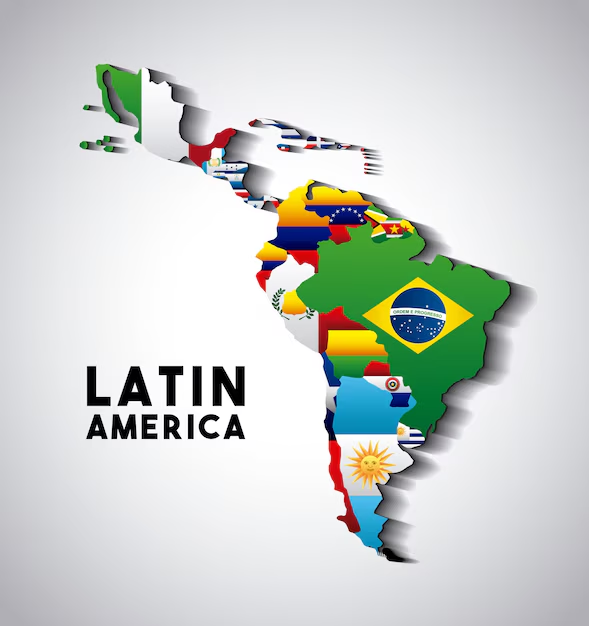
South American Foreign Policy & Indigenous Rights: Progress, Challenges, and the Path Forward
Welcome Back.
Updated at: 2025-04-13 02:07:21 (8 months ago by Melkisedeck Leon Shine)
South American nations have demonstrated a growing commitment to advancing indigenous rights within the framework of their foreign policies. This commitment represents significant progress, yet considerable challenges persist. This article explores both the successes and the ongoing hurdles, highlighting the path toward a more equitable and unified Americas.
Significant Steps Forward:
Several key initiatives demonstrate a positive shift in South American foreign policy regarding indigenous populations. The acknowledgment of historical injustices suffered by indigenous communities marks a crucial first step, paving the way for restorative justice and a more equitable future. This recognition is further solidified by the implementation of robust legal frameworks designed to protect and promote indigenous rights, ensuring meaningful participation in decision-making processes. This commitment to consultation and participation strengthens democratic principles and reflects a genuine effort to incorporate diverse perspectives into policy formation.
Furthermore, significant strides have been made in securing land rightsโa cornerstone of indigenous identity, culture, and economic sustainability. Efforts to protect indigenous territories allow communities to maintain their traditional ways of life and safeguard their cultural heritage. This commitment extends to the preservation of indigenous cultures themselves, with various initiatives supporting the continuation of traditional arts, crafts, languages, and customs. Economic empowerment initiatives, providing training, resources, and opportunities, aim to foster self-sufficiency and improve the socio-economic well-being of indigenous communities.
The international stage also witnesses South America's active role in advocating for indigenous rights. Collaboration with other nations through international forums amplifies the voice of indigenous communities and promotes global awareness of their needs. This international cooperation is essential to address the transnational nature of many of the challenges faced by indigenous populations.
Persistent Challenges and Future Directions:
Despite these considerable achievements, significant obstacles remain. Persistent poverty and inequality continue to disproportionately affect indigenous communities, demanding comprehensive social and economic policies to address these systemic issues. Equitable access to quality education and healthcare is paramount for empowerment and well-being, requiring substantial investment and targeted programs. Environmental protection, deeply intertwined with indigenous livelihoods and cultural survival, necessitates a collaborative approach involving indigenous communities in decision-making processes to ensure sustainable practices.
The unique traditional knowledge held by indigenous communities represents a valuable resource for sustainable development and should be recognized and harnessed responsibly. Concurrently, combating discrimination and racismโwhich manifests in various insidious formsโrequires sustained effort through promoting tolerance, respect, and inclusion. Strengthening indigenous institutions, through capacity-building and inclusive governance, is crucial for effective representation and participation. Empowering indigenous women and engaging indigenous youthโthe future leaders of their communitiesโare essential components of a holistic approach.
Conclusion:
The progress made in promoting indigenous rights within South American foreign policy is undeniable. However, the persistent challenges demand continued and intensified effort. By strategically addressing poverty, inequality, discrimination, and environmental concerns while simultaneously empowering indigenous communities and engaging the youth, South America can further strengthen its commitment to creating a more inclusive and unified region. This requires a sustained commitment to fostering dialogue, collaboration, and meaningful action across all sectors of society. The path towards a truly equitable future necessitates ongoing collaboration and a shared vision, ensuring that the voices and rights of indigenous communities are not only heard but truly respected and championed.
Updated at: 2025-05-17 14:16:24 (7 months ago by Melkisedeck Leon Shine)
This article explores the potential for synergistic healthcare in South America by integrating Indigenous and Western medical systems. We will define key concepts, analyze the strengths and limitations of each approach, and propose strategies for successful integration, drawing upon relevant theories and models such as the biopsychosocial model and the socioecological model. The biopsychosocial model emphasizes the interconnectedness of biological, psychological, and social factors in health and illness, while the socioecological model highlights the influence of multiple levels of influenceโindividual, interpersonal, organizational, community, and societalโon health behaviors and outcomes. Successful integration requires navigating cultural nuances and fostering collaborative partnerships. Ultimately, this endeavor promises enhanced community health outcomes and social justice.
Indigenous medical systems represent a holistic approach to health and well-being. Rooted in centuries of ancestral knowledge and practice, these systems emphasize the interconnectedness of mind, body, and spirit. They incorporate preventative measures, natural remedies derived from a rich pharmacopoeia of plants, and spiritual ceremonies aimed at restoring balance and harmony. This approach aligns with the tenets of the biopsychosocial model by considering the individual within their social and cultural context. The effectiveness of these traditional practices can be validated using rigorous methodologies including ethnographic research and randomized controlled trials, and many communities have extensive documentation of these approaches, allowing for a rich understanding of the knowledge base. Analyzing the effectiveness of specific interventions requires the application of relevant statistical methods and a careful consideration of the cultural context in which they are used.
Western biomedicine, in contrast, is characterized by its reliance on scientific research, technological advancements, and specialized interventions. It excels in diagnosing and treating acute and chronic illnesses using advanced surgical techniques, pharmaceutical therapies, and sophisticated diagnostic imaging. However, this model often overlooks social determinants of health, failing to fully address the broader societal and environmental influences contributing to disease. The application of the socioecological model highlights the limitations of a purely biomedical approach, emphasizing the need for interventions at multiple levels, from individual behavior change to policy-level reforms. This system excels in dealing with acute problems such as trauma, heart attacks, etc. but has limitations in addressing chronic issues like mental health issues stemming from socioeconomic issues and cultural factors.
Integrating these disparate systems requires addressing significant challenges. Cultural differences and language barriers can hinder effective communication and collaboration. Mistrust and skepticism from both practitioners and communities must be actively addressed through open dialogue and mutual respect. Applying principles of intercultural competence, as outlined in the work of Bennett, is crucial in bridging these divides. Furthermore, concerns surrounding intellectual property rights associated with traditional medicines must be addressed ethically and equitably, ensuring fair compensation and benefit-sharing arrangements.
Successful integration demands a multifaceted approach. Collaborative research initiatives, utilizing both qualitative and quantitative methods, can rigorously assess the efficacy of Indigenous medicinal practices while simultaneously enhancing scientific understanding. Joint training programs for healthcare providers should equip them with the skills to integrate both traditional and Western medical approaches effectively. The empowerment of community health workers, trained in both systems, is essential for culturally sensitive healthcare delivery, particularly in underserved regions. These strategies align with community-based participatory research (CBPR) principles, placing community members as active partners in research and healthcare delivery.
Strengthening primary healthcare services by embedding Indigenous approaches offers improved access to care, particularly in remote areas. This can include integrating traditional healers into healthcare teams, incorporating traditional medicinal plants into treatment plans, and investing in traditional healing centers as platforms for broader community health initiatives. This approach requires careful consideration of sustainability, resource allocation, and the development of robust referral systems to facilitate seamless transitions between Indigenous and Western healthcare settings. The effective implementation of these interventions requires the application of relevant management models, ensuring efficient resource allocation and effective program evaluation.
The long-term success of integrated healthcare depends on intergenerational knowledge transfer. Educating youth about the value of both systems fosters cultural pride and empowers them to advocate for holistic healthcare. This necessitates intergenerational dialogue, safeguarding traditional knowledge, and encouraging collaboration among young practitioners. Educational programs should incorporate both formal and informal learning approaches, utilizing storytelling, apprenticeship models, and modern educational technologies.
Successful integration of Indigenous and Western medical systems requires a collaborative effort from all stakeholders: governments, healthcare institutions, community leaders, and individual practitioners. Supportive policies, resource allocation, and facilitation of collaborative projects are crucial. By embracing the strengths of both approaches, we can achieve a more equitable, culturally sensitive, and effective healthcare system in South America. This requires continuous evaluation and adaptation of integration strategies based on community feedback and measurable health outcomes. Further research should focus on longitudinal studies, exploring the long-term impact of integration on health equity and cultural preservation. Specific areas for further investigation include the development of standardized protocols for integrating traditional medicinal plants into Western medical practice, and the creation of culturally appropriate health education materials. The successful implementation of these recommendations will not only improve health outcomes but also foster social justice and strengthen cultural identity.
Reader Pool: What are the potential ethical and logistical challenges associated with implementing these integration strategies, and how might these challenges be mitigated to ensure equitable and sustainable healthcare systems in South America?
Updated at: 2025-06-09 12:29:34 (6 months ago by Melkisedeck Leon Shine)
In the contemporary globalized landscape, characterized by pervasive digital interconnectedness, digital governance and cybersecurity have ascended to paramount importance. The Americas, encompassing both developed and developing nations, face a unique confluence of challenges and opportunities within this domain. This analysis examines key contemporary issues in international relations and cooperation regarding digital governance and cybersecurity in the Americas, advocating for collaborative strategies to fortify regional resilience. We define digital governance as the framework of policies, regulations, and norms governing the use and management of digital technologies, while cybersecurity encompasses the measures taken to protect computer systems, networks, and data from unauthorized access, use, disclosure, disruption, modification, or destruction.
Conclusions and Recommendations: Digital governance and cybersecurity cooperation in the Americas face significant challenges, but also present considerable opportunities for progress. A collaborative approach emphasizing capacity building, harmonized regulations, secure information sharing, and robust incident response mechanisms is vital. Further research should focus on developing empirically-grounded models for assessing the effectiveness of cross-border cooperation, measuring the impact of capacity building initiatives, and evaluating the efficacy of different public-private partnership models. The long-term success of these efforts depends on a commitment to fostering trust, transparency, and shared responsibility among all stakeholders, recognizing that building a secure and equitable digital future requires a collective effort. The application of established frameworks like the NIST Cybersecurity Framework, coupled with a strong emphasis on international cooperation and capacity-building, is key to mitigating risks and maximizing the benefits of a connected world.
Reader Pool: How can the Americas effectively balance national security concerns with the need for increased international cooperation in cybersecurity, considering the inherent tension between data sovereignty and the collective defense against cyber threats?
Updated at: 2025-04-13 02:08:00 (8 months ago by Melkisedeck Leon Shine)
```htmlThe diverse tapestry of communities across the Americas presents unique challenges to public safety, demanding innovative solutions beyond traditional policing models. Reactive approaches often fail to address the root causes of crime and the broader needs for community well-being. Community policing offers a transformative alternative โ a proactive, community-centric strategy that strengthens public safety while fostering stronger, more resilient communities throughout North and South America. This guide details fifteen crucial strategies for implementing effective community policing and building trust.
Community policing transcends the limitations of reactive law enforcement. It prioritizes collaboration, fostering robust relationships between law enforcement and the communities they serve. This partnership proactively addresses the underlying causes of crime, promoting a shared responsibility for safety and security. This collaborative approach fosters mutual respect and understanding, prioritizing community needs in all public safety initiatives.
Trust is the bedrock of effective community policing. Law enforcement agencies must demonstrate unwavering accountability and transparency. Active engagement with residents, empathetic listening, and responsive actions are crucial. Consistent positive interactions, coupled with a genuine commitment to addressing community concerns, build mutual trust and respect. Open communication ensures residents feel heard, understood, and empowered.
The Americas' rich cultural diversity necessitates a nuanced approach to law enforcement. Officers require training to understand and respect this diversity, ensuring all interactions are culturally sensitive, inclusive, and unbiased. Ongoing training and a commitment to understanding the unique needs of diverse communities are essential for building trust and fostering positive relationships. This includes specialized cultural competency programs tailored to specific regional and population needs.
Effective community policing demands strong partnerships among diverse stakeholders. Law enforcement agencies, community organizations, local leaders, and residents must collaborate, leveraging their collective strengths and resources to identify and address community challenges. This synergistic approach enables comprehensive solutions that target the root causes of crime, preventing future incidents and creating safer environments for all.
Community policing prioritizes proactive problem-solving over simply reacting to incidents. This involves identifying underlying issues contributing to crime and developing targeted, evidence-based solutions. Addressing the root causes of crime significantly reduces criminal activity, fostering a safer and more secure environment.
Active community engagement is paramount. Law enforcement must actively involve residents in decision-making processes, creating open dialogue and feedback platforms. This participatory approach ensures policing strategies align with community priorities and needs, fostering a sense of ownership and shared responsibility for public safety.
Equipping officers with the skills and knowledge to interact effectively with diverse communities is critical. Comprehensive training programs should focus on cultural sensitivity, de-escalation techniques, conflict resolution, and effective community engagement. Ongoing professional development ensures officers remain equipped to meet the evolving challenges of community policing.
Engaging and empowering youth is an investment in long-term community safety. Providing positive opportunities, involving young people in decision-making, and implementing comprehensive mentoring programs can significantly reduce crime and foster a stronger sense of community ownership. Investing in youth development builds a foundation for a safer and more prosperous future.
Restorative justice practices prioritize healing and reconciliation, focusing on repairing the harm caused by crime. This approach involves victims, offenders, and the community, fostering accountability and solutions that benefit all parties. Restorative justice promotes community healing and reduces recidivism.
Open communication is essential. Law enforcement should proactively share information with the community, providing regular updates on crime trends and safety initiatives. Transparency builds trust and empowers residents to actively participate in shaping their community's safety and security.
Community policing must confront systemic issues contributing to crime, such as poverty, inequality, and limited access to resources. Addressing these root causes through collaborative community initiatives creates a more equitable and safer environment for all, promoting social justice and inclusion.
Technology can significantly enhance community policing efforts. Tools like predictive policing, crime mapping, community-based mobile applications, and improved communication systems provide valuable insights and facilitate more effective responses to community needs. Data-driven strategies optimize resource allocation and improve overall efficiency.
Regular evaluation is essential to ensure community policing strategies remain effective. Feedback from residents, data analysis, and performance reviews should inform ongoing adjustments and improvements to program design and implementation. Adaptability ensures strategies remain relevant and responsive to evolving community needs.
Acknowledging and celebrating successes reinforces positive change and fosters community pride. Highlighting achievementsโreduced crime rates, improved community engagement, and strengthened partnershipsโstrengthens community morale and encourages continued collaboration and commitment.
Continuous learning about contemporary community and social development issues in the Americas is crucial for all stakeholders. Staying informed and actively participating in the dialogue empowers individuals to contribute to a safer, more unified community. This commitment to ongoing education fosters a culture of improvement and innovation within the public safety sector.
In conclusion, community policing, driven by trust and collaboration, is a powerful tool for enhancing public safety across the Americas. By embracing these strategies, communities can create safer, more inclusive environments, fostering a stronger sense of unity and shared responsibility for well-being. The future of public safety lies in building strong, resilient communities through collaborative partnerships and proactive engagement.